
Flowers
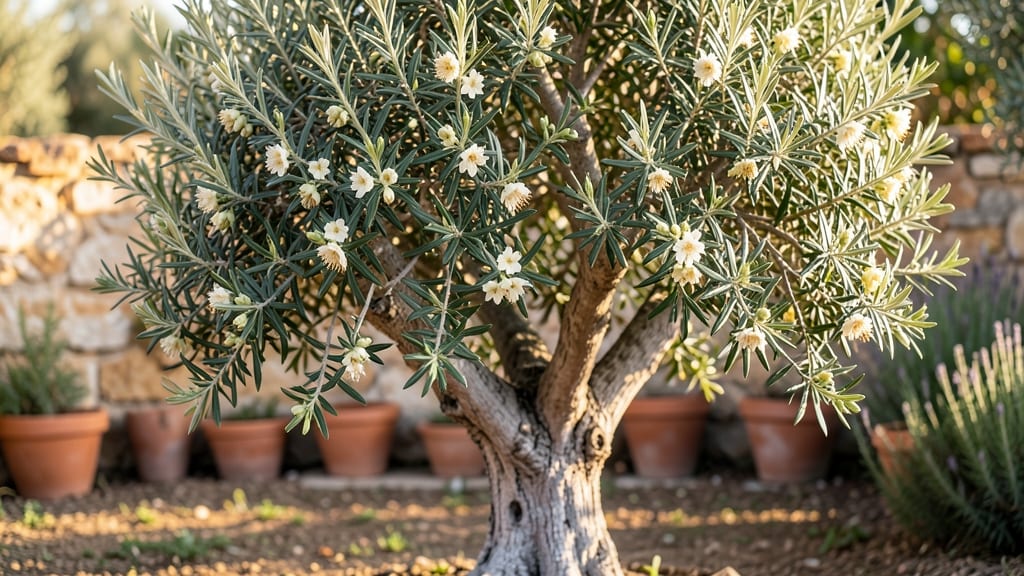
Olives flower in late spring, typically between May and June, when temperatures hit that sweet spot of 70-85°F—a window that can shift by weeks depending on your Mediterranean climate zone.
Picture this: your 🫒 olive tree suddenly bursts into tiny white or pale green blossoms, filling the air with a faint, sweet scent. But here’s the catch—if your tree is young, stressed, or not in the right zone, those blooms might never appear, or they’ll drop before fruit sets.
The timing isn’t just about the calendar; it’s about temperature consistency, soil moisture, and even last year’s harvest. A sudden heatwave or drought can delay flowering, while proper pruning and balanced nutrients (like a spring feed) set the stage for success.
In this guide, I’ll break down the exact cues to watch for, how to adjust care for peak blooming, and why some olives skip flowering entirely—so you can turn your tree into a fruit-bearing powerhouse.
Olive tree flowering timeline: months and climate triggers
Olive trees (Olea europaea) bloom in a highly climate-dependent window, typically between late spring and early summer—but exact timing varies by Mediterranean zone.
In coastal areas like Malaga or Athens, flowering often starts in April or May, while inland regions (e.g., Sicily or California’s Central Valley) may see blooms as late as June.
These differences stem from temperature fluctuations and rainfall patterns, which trigger dormancy break and flower initiation.
Your tree’s age also plays a role: Young trees (under 5 years) may delay flowering until they reach mature size (10+ feet), while established trees produce abundant blooms annually. Pruning in late winter can encourage earlier flowering by promoting new growth, but over-pruning risks stressing the tree.
Understanding these triggers helps you predict and optimize your olive tree’s flowering cycle for a better harvest.
| Climate Zone | Flowering Window | Key Temperature Trigger | Rainfall Impact | Best Variety for Zone |
|---|---|---|---|---|
| Coastal Mediterranean (e.g., Malaga, Athens) | April–May | 55–65°F (13–18°C) | Moderate rain (1–2 inches) | Arbequina, Koroneiki |
| Inland Mediterranean (e.g., Sicily, California Central Valley) | May–June | 60–70°F (15–21°C) | Low rain (drought stress) | Manzanillo, Frantoio |
| USDA Zone 9a–10a (e.g., Los Angeles, Phoenix) | March–April | 50–60°F (10–15°C) | Irrigation needed | Mission, Sevillano |
| Cooler Coastal (e.g., Monterey Bay, Spain’s Basque Country) | June–July | 65–75°F (18–24°C) | High humidity delays blooms | Leccino, Picholine |
Temperature is the primary trigger for olive tree flowering. Trees require a cool winter dormancy period (below 50°F/10°C) followed by a gradual warm-up to 55–70°F (13–21°C). If winters are too mild (e.g., USDA Zone 10b), flowering may be irregular or sparse.
In contrast, hot inland climates (like Southern Spain) often delay blooms until June due to heat stress.
Rainfall also influences timing: Moderate spring rains (1–2 inches) encourage blooming, while drought or excess moisture can disrupt the process. In dry inland zones, supplement with drip irrigation during bud formation.
Conversely, coastal areas with high humidity may experience delayed flowering due to fungal risks. Monitor your tree’s soil moisture and adjust watering to avoid stress.
Pruning timing matters too. Light pruning in late winter (before buds swell) removes dead wood and encourages new growth, which often flowers earlier. However, heavy pruning after flowering can reduce next year’s fruit set.
Use sharp, sterilized shears to make cuts just above bud unions, and avoid pruning during peak heat (July–August) to prevent sunburn.
If your olive tree isn’t flowering, check for nutrient deficiencies. A balanced fertilizer (10-10-10 NPK) applied in early spring supports bloom development. Zinc or boron deficiencies (common in alkaline soils) can also hinder flowering.
Test your soil and amend with compost or organic matter if needed. Young trees may need 2–3 years to mature enough for flowering, so patience is key.
Watch for pre-flowering signs: small green buds forming at branch tips, increased leaf growth, and a sweet scent in the air. These
Signs your olive tree is ready to flower (and what to do next)
Your olive tree 🫒 is about to bloom when you spot small green buds forming in clusters along the branches—these are the flower buds that will soon open into fragrant white blooms.
This usually happens in late spring to early summer, but timing depends on your climate zone and tree’s age. Younger trees may take 3-5 years to flower, while mature trees (10+ years) produce blooms more reliably.
Pay close attention to the leaf growth patterns too. Healthy new leaves emerging alongside those buds signal your tree is energized for flowering.
If your tree has been dormant or stressed, these signs may appear later in the season. Pruning in late winter can also encourage stronger bud formation, so timing matters!
- 1. Tiny green buds appear in clusters along branches (late spring).
- 2. New leaf growth emerges alongside buds—sign of energy for blooming.
- 3. Fragrant white flowers (if buds open) indicate active flowering phase.
- 4. Prune in late winter to remove dead wood and encourage bud formation.
- 5. Adjust watering to deep soaks every 10-14 days (avoid overwatering).
- 6. Apply balanced fertilizer (10-10-10) in early spring to support blooms.
Once you see those fragrant white flowers, your tree is officially flowering! This is your cue to reduce stress factors like overwatering or heavy pruning.
Olive trees are self-pollinating, but bees help increase fruit set. If your area lacks pollinators, gently shake branches to encourage cross-pollination during peak bloom.
After flowering, focus on fruit development. Young olives need consistent moisture but avoid soggy soil—this can cause rot. Mulch around the base to retain moisture and regulate soil temperature. Harvest readiness comes 6-12 months later, when olives turn purple/black and yield slightly to pressure.
If your tree skips flowering, check for nutrient deficiencies (yellow leaves) or poor drainage (root rot). Amend soil with compost and ensure full sun exposure. Patience is key—some varieties like Arbequina flower earlier than Manzanillo, so research your tree’s needs!
With the right care, your olive tree will reward you with abundant blooms and a future harvest. Keep an eye on those buds, and you’ll never miss the flowering window again! 🌿