
Flowers
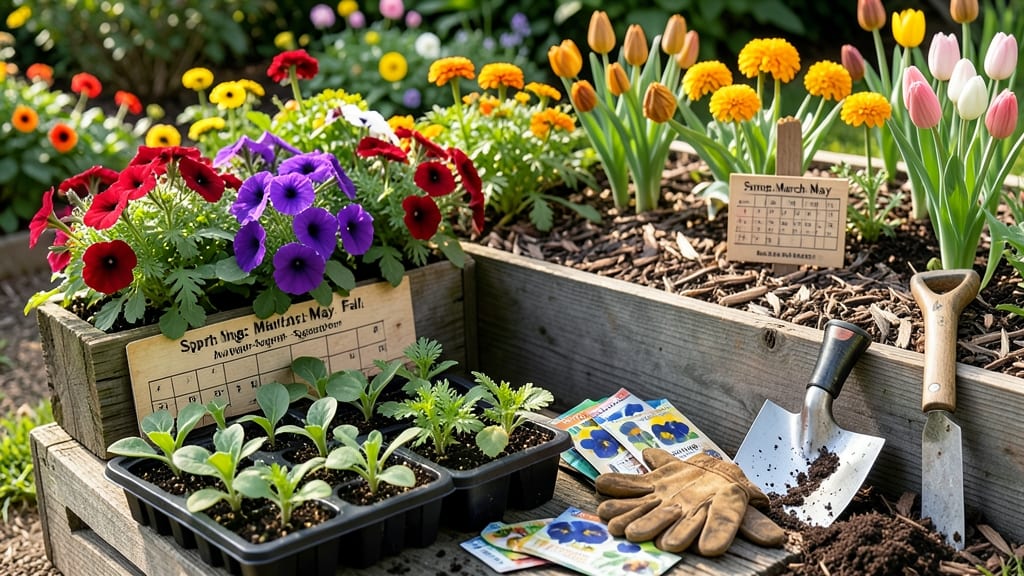
Planting flowers in Connecticut at the right time means catching that narrow window between frost risk and peak bloom seasons—usually late April to mid-May for most varieties, but with fall options too.
Miss that timing and you might end up with frost-nipped petals or flowers that bloom too late for their full potential. Connecticut’s 5b-6b zones add another layer, where early spring can still bring surprises even after the last frost date.
Below, I’ll break down the exact frost-free dates by region, the best flowers to plant for each season, and how to adjust for Connecticut’s unpredictable weather—so your garden stays vibrant from spring through fall.
You’ll also find a simple checklist to prep your soil, choose the right varieties, and even extend your blooming season with a few pro tips tailored to Connecticut gardeners.
Connecticut frost-free dates by Zone: exact planting windows for annual & perennial flowers
Connecticut’s USDA Zones 5a-6b create unique planting challenges, where late spring frosts can still hit as late as May 10-20. Knowing your frost-free dates is critical—plant too early and risk frost damage, too late and miss peak bloom seasons.
Most of Connecticut’s hardiness zones 5b-6b have an average last frost date between April 15-25, but microclimates near water or hills can shift this by 1-2 weeks.
For annual flowers, timing is everything—cool-season varieties like pansies and snapdragons can handle light frosts, while tender perennials like geraniums need to wait until soil warms to 60°F.
In Zone 5a (northwest CT), aim for May 1 planting, while Zone 6b (southeast CT) can start as early as April 20. Always check your local Almanac for real-time updates, as 2023’s late frost in May proved how unpredictable CT springs can be.
For annual flowers, your planting window is short—typically 2-4 weeks after the last frost. In Zone 5a, this means waiting until May 15 to plant heat-loving annuals like zinnias or sunflowers.
In Zone 6b, you can start as early as April 20 for cool-season annuals like lettuce (yes, it’s a flower too!) or pansies. Pro tip: Use biodegradable pots to transplant seedlings after frost risk passes.
Perennials are more forgiving—many can be planted 2-4 weeks before the last frost, even in Zone 5a. Black-eyed Susans and coneflowers (both Zone 3-9) handle CT’s late frosts beautifully, while peony (Zone 3-8) should be planted in early spring for best root establishment.
For fall-blooming perennials like asters, plant in early September to give roots time to establish before winter.
Don’t forget about fall planting—many perennials and bulbs (like tulips and daffodils) thrive when planted in September or October. The soil stays warm enough for root growth, but cool nights prevent premature sprouting.
In Zone 5a, aim for September 15 planting; in Zone 6b, you can extend this to October 10. Mums and chrysanthemums are perfect fall additions and love CT’s cooler autumn weather.
If you’re unsure about your exact frost-free date, use the 50°F soil temperature rule: Plant when the soil reaches this mark at 5-inch depth. For container gardening, move pots indoors or to a
Best flower varieties to plant in Connecticut: early spring vs. late spring vs. summer bloomers
Timing is everything when planting flowers in Connecticut, where spring frosts can linger until mid-April and summer heat arrives early.
To maximize your garden’s beauty, I’ve categorized the best-performing flowers by their ideal planting windows—early spring, late spring, and summer bloomers—so you can plan for continuous color all season long.
For early spring bloomers, focus on hardy perennials and bulbs that thrive in cool soil temperatures (40–50°F). These varieties often need fall planting or early March sowing to establish roots before winter.
Meanwhile, late spring and summer annuals should wait until after the last frost date (typically May 10–20 in CT) to avoid frost damage.
- Daffodils & Tulips: Plant bulbs in October–November for April–May blooms. Choose Ice Follies daffodils (frost-resistant) or Darwin Hybrid tulips for CT’s climate.
- Bleeding Heart & Lungwort: Sow seeds in fall or divide perennials in early spring. These thrive in partial shade and moist soil.
- Crocus: Plant in September–October for February–March blooms. Ideal for rock gardens or woodland edges.
- Pansies & Violas: Direct-sow seeds in late April–May for May–June blooms. Choose Matrix series for heat tolerance.
- Sweet Alyssum: Scatter seeds in May for June–July flowers. Perfect for edging or container gardens.
- Black-Eyed Susan: Plant seeds or transplants in May for July–September blooms. Drought-tolerant once established.
- Zinnias: Sow seeds in May–June for July–October blooms. Choose Benary’s Giant for long stems.
- Marigolds: Plant in late May to avoid early frost damage. French marigolds attract pollinators and repel pests.
- Coneflowers & Bee Balm: Transplant in May for June–September flowers. Purple Coneflower is a pollinator magnet.
Pro tip: For continuous blooms, interplant early spring bulbs with late spring annuals and summer perennials. For example, pair daffodils (early) with zinnias (summer) to keep your garden vibrant from March through October.
Mulch with 3–4 inches of straw after planting to retain moisture and regulate soil temperature.
In Connecticut’s USDA Zones 5b–6b, soil temperatures are critical—wait until the ground warms to 60°F before planting heat-loving annuals like zinnias or marigolds. If you’re unsure, use a soil thermometer to check before sowing seeds.
For perennials, like coneflowers, early May planting gives them time to establish roots before summer heat arrives.
Don’t forget to deadhead spent blooms regularly to encourage more flowers and extend the season. For fall color, plant asters or chrysanthemums in early September for October–November blooms—just before the first frost!