
How To
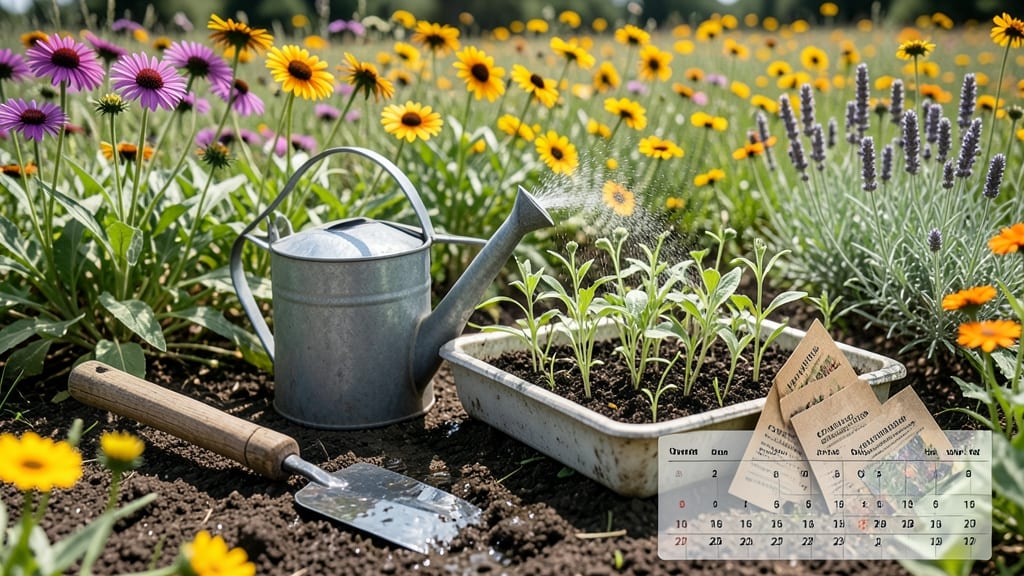
Wondering how long do wildflower seeds take to grow? The answer is surprisingly quick—just 30 to 120 days, depending on the variety—but knowing the exact timeline helps you plan for a stunning meadow without the wait.
Picture this: you scatter seeds in early spring, and by summer, your yard is a buzzing, colorful haven. But what if your wildflowers 🌼 take longer than expected? The answer lies in understanding the germination window, your climate zone, and a few simple tricks to speed things up.
From fast-blooming annuals like cosmos (ready in 30 days) to slower perennials like black-eyed Susans (up to 120 days), each type has its own schedule.
In USDA Zone 6a, timing your planting window—either in March or September—can make all the difference between a patchy meadow and a lush, continuous display.
In this guide, I’ll break down the exact growth stages, share zone-specific tips to accelerate blooms, and reveal the top 5 mistakes that slow down germination. Ready to transform your space into a wildflower paradise faster than you thought possible?


Wildflower seed germination & growth timeline by fastest to slowest bloomers
If you're dreaming of a vibrant wildflower meadow, timing is everything! Some varieties burst into bloom in as little as 6 weeks, while others take nearly 6 months to reach their full glory.
The key difference lies in whether you're planting annuals (fastest bloomers) or perennials (slower but long-lasting). Let's break down the exact timelines so you can plan your garden with precision.
For fastest bloomers, think annual wildflowers like cosmos and zinnia, which often sprout in 7-14 days and bloom in 6-8 weeks. On the opposite end, perennial wildflowers like black-eyed Susan or coneflower may take 30-60 days just to germinate and 120-180 days to reach peak bloom.
Understanding these differences helps you set realistic expectations and choose the right varieties for your timeline.
Your USDA climate zone also plays a huge role. In warmer zones (8-10), germination happens faster due to consistent temperatures, while cooler zones (3-5) may see delayed sprouting until soil warms.
For example, California poppies in Zone 9 might bloom in 45 days, while the same seeds in Zone 4 could take 70-90 days. Let's explore these variations in detail.
| Wildflower Type | Germination Time | Time to Bloom | Best Zones | Notes |
|---|---|---|---|---|
| Zinnia | 7-14 days | 6-8 weeks | 3-10 | Annual; loves full sun |
| Cosmos | 10-21 days | 7-9 weeks | 5-10 | Drought-tolerant; fast-growing |
| Sunflower | 14-28 days | 8-12 weeks | 3-9 | Tall; needs staking |
| California Poppy | 14-30 days | 45-60 days | 5-9 | Perennial; self-seeds |
| Black-Eyed Susan | 30-60 days | 120-150 days | 3-9 | Perennial; long-lived |
| Coneflower | 21-45 days | 150-180 days | 3-10 | Attracts pollinators; tough |
For annual wildflowers, the journey from seed to bloom is remarkably fast. Take cosmos, for example: these cheerful flowers can sprout in just 10-21 days and reach their first blooms in 7-9 weeks.
This makes them perfect for quick color in your garden, especially if you're planting in late spring or early summer when temperatures are ideal. In USDA Zone 9, you might even see cosmos blooming as early as 6 weeks after sowing!
On the other hand, perennial wildflowers like coneflower or bee balm require more patience. These beauties often take 30-60 days just to germinate, and their first blooms won't appear until 120-180 days later. However, the trade-off is years of blooms
How climate zones & soil conditions accelerate or delay wildflower growth
Your wildflower seeds might sprout in 7 days in Zone 9 with warm soil, but take 30 days in Zone 5 if temperatures hover near freezing. These differences aren't random—they're tied to your climate zone, soil moisture, and sun exposure.
Understanding these factors lets you adjust planting times and care routines to coax faster blooms from your meadow.
Warmer zones like Zone 8-10 often see faster germination (as little as 5-10 days for sun-loving species like black-eyed Susans), while cooler Zone 3-5 regions may need 4-6 weeks before tiny green shoots appear.
Even within the same zone, soil drainage and rainfall patterns can shift timelines by 2-3 weeks. Let's break down how to work with—not against—your local conditions.
In Zone 5, I've found that fall planting (September-October) gives seeds a head start—they stratify naturally over winter, then burst into growth as soon as soil warms in spring. Meanwhile, in Zone 9, spring planting works best because seeds germinate immediately when rains return.
The key is matching your planting window to your local frost dates and rainfall peaks.
Soil type plays an equally critical role. Sandy soils drain quickly, which speeds up germination but requires frequent watering afterward. Clay soils hold too much moisture, often causing seeds to rot before sprouting. Amending clay with compost or sand can cut germination time by 25%.
For example, black-eyed Susans in amended clay may take 3 weeks to sprout, while the same seeds in unamended clay could linger for 6 weeks.
Don't overlook sunlight exposure—even in ideal zones. Partial shade can delay blooming by 3-4 weeks for sun-loving species like coneflowers. In Zone 7, I've seen Mexican sunflowers bloom in 6 weeks with full sun, but the same seeds took 10 weeks under 50% shade.
If your garden has limited sun, choose shade-tolerant varieties like columbine or foxglove, which adapt better to cooler, less intense light.
To accelerate growth in cooler zones, try warmth mats or row covers—these can shave 1-2 weeks off germination in Zone 4. In drier zones like Zone 9, mulching with straw retains moisture and encourages faster root establishment.
The right adjustments turn waiting weeks into blooming months, giving you that vibrant meadow you dream of.