
Planting
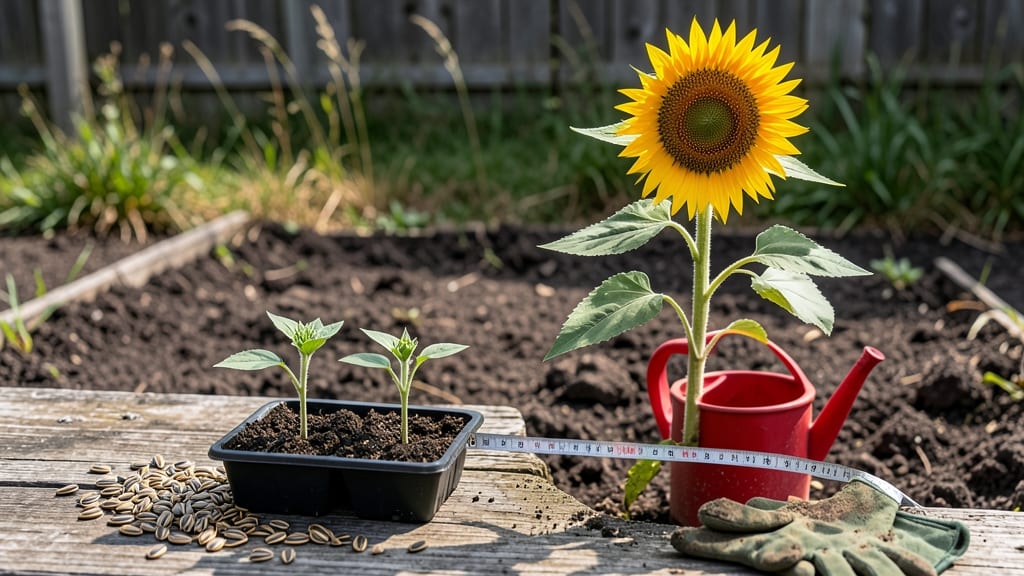
A sunflower seed takes about 80 to 120 days to grow from sprout to full bloom, depending on the variety and growing conditions.
Watching a tiny sunflower seed transform into a towering, radiant bloom is one of gardening’s most rewarding experiences—but timing is everything. If you’re eager to know exactly how long it takes for sunflower seeds to grow from soil to sun, you’ve come to the right place.
Most sunflower varieties reach maturity in roughly three months, but factors like sunlight, soil quality, and watering can speed up or slow down the process.
In USDA Zone 6a, planting in April or May gives you the best shot at a full season of growth before the first frost.
Below, I’ll break down the key stages of sunflower growth, share tips to accelerate your plants’ progress, and help you avoid common pitfalls that delay blooming.
Sunflower growth timeline: key stages from seed to flower in 80-120 days
Sunflowers are nature’s fastest-growing giants, shooting from seed to towering bloom in just 80-120 days. Understanding each growth stage helps you anticipate milestones—like when to thin seedlings or expect those iconic yellow faces.
From the first green cotyledons breaking soil to the heavy seed heads ready for harvest, every phase depends on sunlight, warmth, and consistent care. Let’s break down the sunflower growth timeline so you can track progress like a pro.
Most sunflower varieties reach maturity in three distinct phases: germination, vegetative growth, and reproductive (flowering) stages. Dwarf varieties like ‘Teddy Bear’ may take 50-60 days, while giant ‘Russian Giant’ sunflowers can stretch growth to 120 days.
The key? Optimal conditions—6-8 hours of sun, well-draining soil, and steady moisture—accelerate each stage. Without these, your sunflowers might linger in the vegetative phase or struggle to flower.
Day 5-14 marks the germination phase, where your sunflower seed cracks open and sends up its first cotyledons (seed leaves). This stage is the most temperature-sensitive: soil must stay consistently warm (70-90°F) to avoid rot or stunted sprouts.
If your seeds take longer than 14 days to emerge, check moisture levels—dry soil or cold temperatures can delay germination by weeks. Pro tip: Soak seeds overnight before planting to jumpstart the process.
Once those first true leaves appear (around Day 14-20), your sunflower enters the vegetative growth phase, where it focuses on building a strong stem and leaf canopy. This is when you’ll see rapid height gains—some varieties grow 2-3 inches per day under ideal conditions.
During this 20-40 day window, prioritize deep watering (1-2 gallons per plant) and a balanced fertilizer (like 10-10-10) when stems reach 6 inches tall. Skipping fertilizer here won’t kill your plant, but it’ll slow that towering growth you’re dreaming of.
By Day 40-60, your sunflower will start forming its bud, a swollen green bump at the stem’s top. This bud formation phase is your cue to reduce watering frequency to every 3-5 days—overwatering now can cause bud blast, where flowers fail to open.
Watch for the bud to stiffen and elongate; this signals the plant is shifting energy from leaves to reproductive growth. If your sunflowers are struggling here, check for aphids or powdery mildew, which thrive in crowded
Factors that speed up or slow down sunflower growth time
Sunflowers may seem like low-maintenance giants, but their growth speed depends heavily on a few critical factors. From sunlight exposure to soil quality, each element plays a role in whether your plants reach maturity in 80 days or stretch toward 120 days.
Let’s break down what truly makes the difference.
First, sunlight is non-negotiable—sunflowers thrive in full sun (6+ hours daily). Even slight shade can delay flowering by 2-4 weeks. I’ve seen seedlings in partial shade grow lanky and pale, taking nearly double the time to bloom compared to their sun-soaked siblings.
Next, soil quality sets the foundation. Well-draining, nutrient-rich soil with a pH of 6.0–7.5 ensures roots establish quickly. Compacted or poor soil slows growth, causing stunted stems and delayed maturity by 30+ days. Always amend with compost before planting!
Watering frequency also impacts speed. Deep, infrequent watering (1–2 gallons per plant) encourages strong roots, while shallow, frequent watering can lead to weak stems and slower growth. Overwatering is just as harmful as underwatering—both can push maturity timelines by 10–20 days.
⚖️ Sunflower Growth Speed: Pros & Cons
✅ Speed Up Growth
- Full sun (6+ hrs/day) → Faster flowering
- Loamy, compost-rich soil → Stronger roots
- Deep watering (1–2x/week) → Healthy stems
- Warm soil (60°F+) → Quick germination
- Dwarf varieties → 80-day maturity
❌ Slow Down Growth
- Partial shade → Lanky, slow growth
- Poor drainage → Root rot risk
- Over/under-watering → Stress delays
- Cool soil (<55°F) → Slow germination
- Tall varieties → 120+ days to mature
Temperature is another game-changer. Sunflowers love warm soil (60°F+) for germination, but cool nights below 50°F can stall growth. I’ve planted seeds in early spring only to see them sprout weeks later when soil finally warmed. Ideal temps (70–85°F) keep growth on track for 80–100 days to maturity.
Finally, seed variety matters. Dwarf sunflowers like ‘Teddy Bear’ mature in 60–80 days, while giant varieties like ‘Mammoth’ take 120+ days. Always check seed packets—this single choice can shave weeks off your growing timeline!
Balancing these factors ensures your sunflowers grow at their fastest possible pace. With the right conditions, you could see those bright blooms in as little as 60 days—but neglect even one, and you might be waiting twice as long. 🌻