
Light Requirements
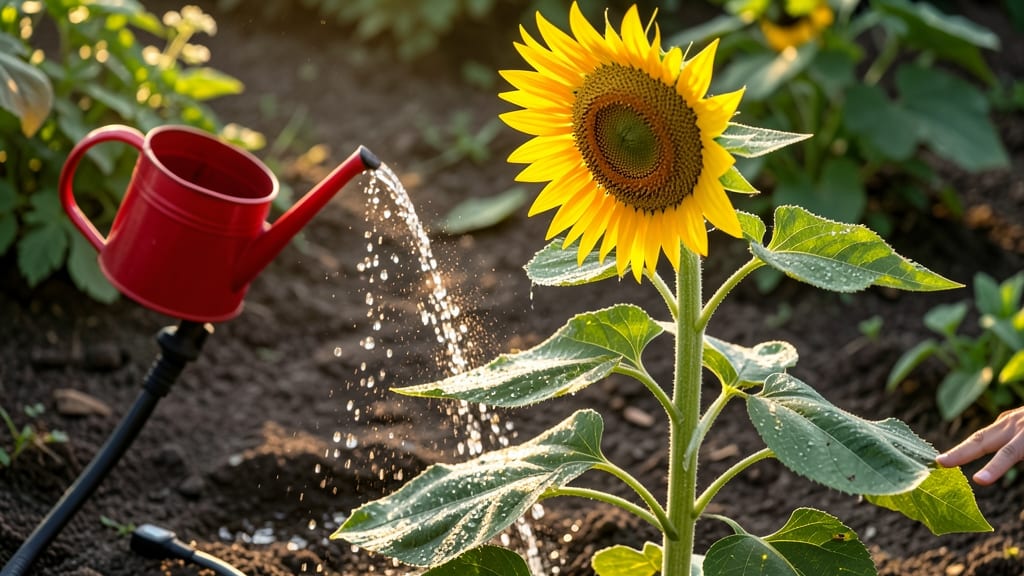
To water sunflowers properly, aim for deep soaks of 1-2 inches every 3-5 days—but timing and amount change as your 🌻 grows from sprout to towering giant.
Here’s the catch: too little water stunts their height, while too much drowns their roots. I’ve seen 12-foot sunflowers wilt from inconsistent watering, and I’ve lost entire plants to soggy soil after a heavy rain. The key is matching your watering to their growth stage.
Sunflowers in Zone 6a need more frequent watering in April-May when they’re establishing roots, but they’ll tolerate longer dry spells once mature. I’ll show you exactly how to adjust for your climate, soil type, and even the variety you’re growing.
By the end, you’ll know when to water, how much to give, and what to watch for—so your sunflowers grow fast and healthy, not stressed. Let’s get started.


Science-backed watering schedule for sunflowers by growth stage
Sunflowers may seem low-maintenance, but their water needs shift dramatically as they grow. Too little water stunts their towering potential, while too much invites root rot and fungal diseases. The key is matching your watering routine to each growth stage—from delicate seedlings to massive flowering stalks.
Let’s break down the science-backed schedule that ensures your sunflowers thrive from seed to harvest.
Sunflowers develop through four distinct stages, each requiring different moisture levels. Seedlings need frequent, shallow watering to prevent damping off, while mature plants prefer deep, infrequent soaks that encourage strong root systems.
Climate plays a huge role too: in hot, dry regions, you’ll water twice as often as in cool, moist climates. Let’s dive into the exact schedule for each stage.
🌱 Pro Tip: Always water at the base of the plant in the morning to reduce evaporation and fungal risks. Avoid wetting the leaves, especially during humid weather.
| Growth Stage | Water Frequency | Soil Moisture Target | Climate Adjustments | Key Focus |
|---|---|---|---|---|
| Seedling (0-2 weeks) | Every 1-2 days | Top 1 inch moist | Hot/dry: daily; cool/moist: every 2 days | Prevent damping off |
| Vegetative (3-6 weeks) | Every 3-4 days | Top 2 inches moist | Hot/dry: every 2 days; cool: every 5 days | Encourage stem growth |
| Flowering (7-10 weeks) | Every 5-7 days | Top 3 inches moist | Hot/dry: every 3-4 days; cool: every 7 days | Support bud development |
| Maturity (10+ weeks) | Every 7-10 days | Top 4 inches moist | Hot/dry: every 5 days; cool: every 10 days | Seed development |
During the seedling stage (weeks 0-2), your sunflowers are most vulnerable. Keep the soil consistently moist but never soggy—this prevents damping off, a fungal disease that kills young plants. Water lightly every 1-2 days, using a spray bottle or fine mist to avoid disturbing the soil.
In hot climates, you may need to water daily, while cooler regions can stretch it to every other day.
As your sunflowers enter the vegetative stage (weeks 3-6), they’ll grow rapidly, reaching heights of 2-3 feet. This is when you shift to deep watering every 3-4 days. Aim to moisten the soil 2 inches deep, which encourages roots to grow downward.
In sandy soil, you’ll need to water more frequently, while clay soil holds moisture longer. Always check soil moisture by sticking your finger 1 inch down—if it’s dry, it’s time to water.
When buds form and the flowering stage begins (weeks 7-10), your sunflowers need consistent moisture to support their massive blooms. Water every 5-7 days, ensuring the soil stays moist 3 inches deep. This is critical for preventing bud drop, where flowers fail to open due to stress.
In extreme heat (above 90°F), increase frequency to every 3-4 days and water in the early morning to reduce evaporation.
In the maturity stage (week 10+), your sunflowers are focused on seed development. Reduce watering to every 7-10 days, allowing the top 4 inches of soil to dry slightly between waterings. Overwatering now can cause seed rot or split seed heads.
If you’re growing sunflowers for seed production, let the soil dry out more between waterings in late summer to harden the seeds for storage.
One common mistake is watering based on a schedule rather than soil conditions. Always check moisture levels before watering—especially in potted sunflowers, which dry out faster than in-ground plants.
Use a moisture meter or the finger test for accuracy. In container gardens, you may need to water every 2-3 days due to limited soil volume and faster evaporation.
For giant varieties like ‘Mammoth Russian’, increase water depth to 3-4 inches during the vegetative stage to support their 10-14 foot height. These varieties also benefit from mulching with straw or wood chips to retain moisture and regulate soil temperature.
If you notice wilting leaves even after watering, it could signal root-bound conditions in containers or poor drainage in the soil.
🌻 Final Tip: Always water at the base of the plant and avoid wetting the foliage to prevent powdery mildew
Signs of overwatering vs. underwatering sunflowers (and how to fix it)
Sunflowers are resilient, but they send clear signals when their water needs aren't met. Yellowing leaves or mushy stems often mean you're overdoing it, while dry soil cracks or drooping foliage scream for hydration. The key is learning these subtle cues before your towering giants suffer.
I've seen root rot turn vibrant sunflowers into sad, limp stalks—usually from well-meaning gardeners who think "more water is better." Yet, I've also watched underwatered plants bolt to flower prematurely, sacrificing size for survival. Both extremes rob you of those 10-foot giants you planted for.
Overwatering Sunflowers
- Prevents wilting in extreme heat
- Encourages taller stems in early growth
- Root rot from soggy soil
- Yellow leaves (chlorosis)
- Stunted growth due to oxygen deprivation
Underwatering Sunflowers
- Prevents fungal diseases
- Encourages deeper roots in dry climates
- Premature bolting (tiny flowers)
- Dry, crispy leaves at edges
- Weak stems prone to snapping
For overwatered plants, I recommend the "finger test": Stick your index finger 2 inches deep into the soil. If it feels damp, hold off on watering. If you spot blackened stems at the base, that's root rot—prune affected areas immediately and improve drainage with perlite or sand.
When underwatering strikes, focus on deep watering rather than frequent shallow drinks. Aim for 1-2 gallons per plant every 3-5 days, depending on your climate zone. Mulch with straw or wood chips to lock in moisture—this trick saved my sunflowers during a 90°F heatwave last summer.
Pro tip: Morning watering is your best friend. It gives foliage time to dry before evening, reducing fungal spores that thrive in damp conditions. I've found that drip irrigation delivers water directly to roots while keeping leaves dry—perfect for giant varieties that need consistent hydration.
Watch for leaf curl or brown edges—these are your sunflowers' SOS signals. Adjust your watering routine based on soil type (sandy soil drains faster than clay) and seasonal changes. With these cues, you'll grow sunflowers that reach their full height without the stress of water woes. 🌻