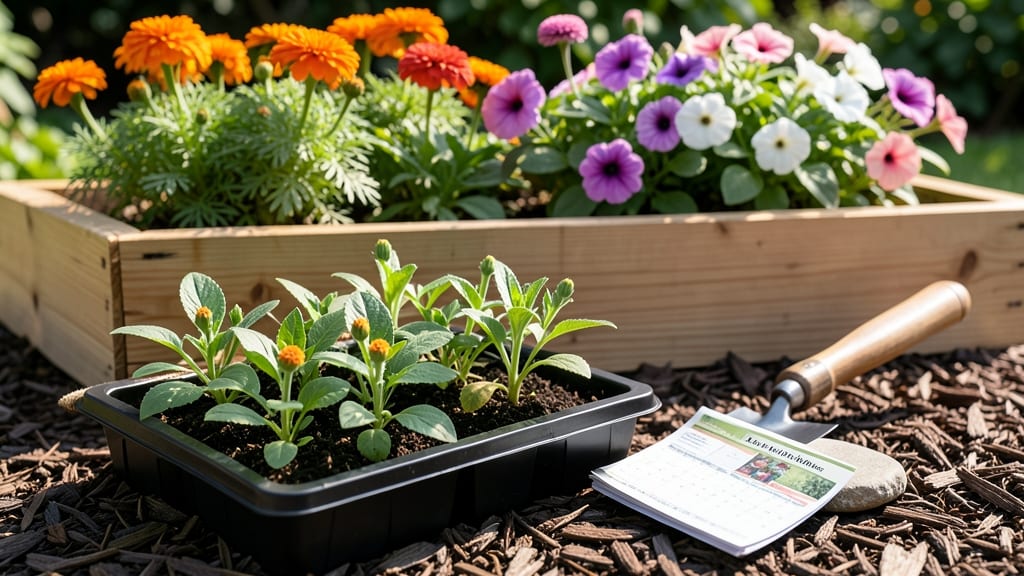
To plant flower seeds in Indiana, aim for late March through early May after the last frost date—typically around April 15—but timing varies by flower type and your zone within 5b-6b.
Indiana’s unpredictable spring weather can turn flower gardening into a guessing game—but timing your flower seed planting right ensures vibrant blooms all season long. With USDA Zone 6’s last frost dates and soil temperatures to consider, knowing when to plant is just as important as what to plant.
Cool-season flowers like pansies and snapdragons can handle early spring plantings, while warm-season beauties like zinnias and marigolds need to wait until soil warms to at least 60°F. Fall planting for late-season blooms is also a smart move, giving you flowers well into October.
Below, I break down the best planting windows by month, how to adjust for Indiana’s microclimates, and which fast-growing flowers thrive in our short growing season—so you can skip the guesswork and enjoy a garden bursting with color.
Jan
❄️
Feb
❄️
Mar
🌱
Apr
🌱
May
🌸
Jun
☀️
Jul
☀️
Aug
🌱
Sep
🌸
Oct
🌸
Nov
🌸
Dec
🌱
Indiana flower seed planting timeline by month (Zone 6 guide)
Indiana’s Zone 6 climate offers a 165-day growing season, but timing your flower seed planting correctly is key to avoiding frost damage or stunted growth. The average last frost date is around April 15, while the first frost typically arrives October 15.
To maximize blooms, align your planting with soil temperatures and seasonal shifts—whether you're sowing cool-season annuals in early spring or warm-season favorites in late summer.
For Indiana gardeners, mastering this timeline means starting some seeds indoors 6-8 weeks before the last frost, while others can be direct-sown after soil warms to 60°F+.
Below is your month-by-month guide, tailored to Indiana’s Zone 6 conditions, including frost-sensitive varieties and hardy perennials that thrive with proper timing.
| Month |
Plant Type |
Ideal Planting Window |
Soil Temp (°F) |
Notes |
| March |
Cool-Season Annuals
Perennials |
Indoors: Late March
Outdoors: After last frost (mid-April) |
40-50°F |
Start pansies, snapdragons, and calendula indoors. Use row covers for early outdoor sowing. |
| April |
Cold-Hardy Annuals
Biennials |
Direct sow after April 15 |
50-60°F |
Plant lupines, foxgloves, and sweet peas. Monitor for late frosts in northern Indiana. |
| May |
Warm-Season Annuals |
After soil reaches 60°F+ (late May) |
60-70°F |
Sow marigolds, zinnias, and cosmos. Use black plastic mulch to warm soil faster. |
| June |
Heat-Tolerant Annuals
Succession Planting |
Ongoing (every 2-3 weeks) |
70°F+ |
Plant sunflowers, portulaca, and celosia. Succession plant basil and nasturtiums for continuous blooms. |
| July |
Fall-Blooming Annuals |
Indoors: Early July
Outdoors: Late July |
60-65°F |
Start cosmos, black-eyed Susans, and dahlias indoors. Direct sow nasturtiums for late-season color. |
| August |
Cool-Season Starts |
Indoors for fall planting |
55-60°F |
Begin broccoli, kale, and snapdragons indoors. Transplant mums for October blooms. |
| September |
Hardy Annuals
Perennials |
Direct sow until September 15 |
How to adjust planting times for Indiana’s microclimates and frost risks
Indiana’s diverse climate—from the cooler northern regions near Lake Michigan to the warmer southern areas—means frost dates can vary by 2-3 weeks. Northern Indiana’s last spring frost often arrives around April 20, while southern Indiana may see frost-free conditions by April 5.
This variation impacts seed-starting timing and direct-sowing windows for flowers.
Microclimates, like urban heat islands or sheltered garden spots, can also shift planting deadlines. For example, a south-facing garden bed warms up faster than a shaded area, allowing earlier sowing of warm-season flowers like zinnias or marigolds. Understanding these nuances helps you avoid frost damage while maximizing bloom time.
-
1
Northern Indiana: Wait until May 1 for frost-sensitive seeds like petunias or geraniums. Use row covers to extend the season by 2-3 weeks for early spring blooms.
-
2
Southern Indiana: Start warm-season flowers like cosmos or sunflowers as early as April 15, but monitor soil temps—aim for 60°F+ to prevent stunted growth.
-
3
Extend seasons: Use cold frames to start cool-season flowers like pansies in September for winter color. Row covers protect tender perennials until May 15 in northern areas.
-
4
Succession planting: Sow fast-growing annuals like bachelor’s buttons every 2 weeks from May to July to ensure continuous blooms through fall frost.
For fall blooms, time your planting so flowers mature before the first frost (typically October 15). For example, plant cosmos seeds by July 1 in southern Indiana or July 15 in northern areas to guarantee 60-70 days of growth before frost.
If you’re unsure about your local frost dates, check the Indiana State Climate Office or use a frost calendar for your county. Adjust planting times by 1-2 weeks based on your garden’s specific conditions—like proximity to water or urban heat—rather than relying solely on regional averages.
Pro tip: Plant hardy annuals like calendula or nasturtiums as early as April 1 under row covers for a head start. These resilient flowers tolerate cooler temps and provide early-season color while protecting your garden from late frosts.
★★★★★4.9(5 reviews)