
Plants
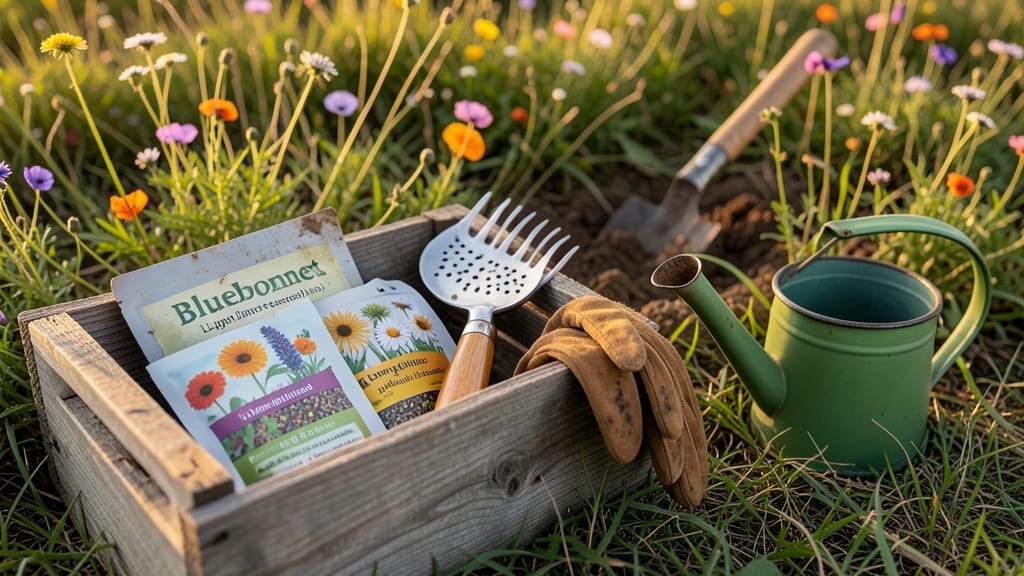
To plant wildflower seeds in Central Texas, aim for late winter to early spring or fall—when the soil stays cool and moisture lingers just enough to kickstart germination.
Central Texas’ scorching summers and unpredictable rains can make wildflower gardening a challenge—but timing your planting right unlocks vibrant, drought-resistant blooms that thrive with minimal effort.
Most gardeners skip fall planting because they assume the seeds won’t survive winter, but that’s exactly when bluebonnets and black-eyed Susans take root. The key is preparing the soil in September or October while temperatures stay mild.
Below, I’ll walk you through the best months for planting, soil prep tips to beat Texas’ alkaline dirt, and how to keep your wildflowers blooming year after year with almost no water.
Best planting months for wildflowers in Central Texas by season
Central Texas’ USDA zones 8a-9b create unique challenges for wildflower gardeners, with triple-digit summer heat and unpredictable rainfall patterns. However, planting at the right time ensures your drought-resistant wildflowers like bluebonnets and black-eyed Susans establish strong roots before extreme conditions arrive.
The key is planting when soil temperatures stay below 85°F and rainfall is more reliable.
Most Central Texas wildflower enthusiasts focus on two primary planting windows: fall (September-October) and early spring (February-March). These periods offer cooler temperatures, moderate moisture, and minimal competition from weeds.
Fall planting, in particular, gives seeds time to germinate before winter rains, while spring planting aligns with natural bloom cycles when pollinators are active.
Winter planting (December-January) is less common but can work for hardy varieties like winter vetch or bluebonnets if you protect seeds with a light mulch. The first frost date (November 15) signals the end of ideal planting windows, so always plan ahead. Summer planting is strongly discouraged due to intense heat stress and evaporative water loss.
For fall planting (September-October), aim to sow seeds 4-6 weeks before first frost (typically by October 15). This timing allows seeds to germinate before winter rains and establish roots before soil temperatures drop. Bluebonnets and Indian paintbrush are classic fall-planted varieties that reward patience with spring blooms.
Always water lightly after planting to activate seeds without displacing them.
Spring planting (February-March) is ideal for annual wildflowers like black-eyed Susans and coreopsis, which thrive when planted after the last frost date (February 15). The warmer soil temperatures and increasing daylight trigger rapid germination. A light mulch layer helps retain moisture during Central Texas’ dry spring winds, while full sun exposure ensures strong, healthy growth.
When selecting wildflower varieties for your Central Texas garden, prioritize native species adapted to USDA zones 8a-9b. Bluebonnets (Lupinus texensis) and Mexican hat (Ratibida columnifera) are drought-resistant champions that bloom prolifically with minimal water. Black-eyed Susans (Rudbeckia hirta) and goldenrod (Solidago spp.) also excel in alkaline soils and high heat, making them perfect for low-maintenance meadows.
After planting, water deeply but infrequently—aim for 1 inch per week during establishment. Once established, wildflowers need very little water, making them ideal for xeriscaping. Mulch lightly with straw or native grass clippings to suppress weeds and retain moisture without smothering seeds.
Avoid heavy mulch layers, which can prevent seed-to-soil contact and reduce germination rates.
One common mistake is overwatering after planting, which can wash seeds away or cause fungal diseases. Instead, use a gentle mist setting on your hose or a watering can with a fine rose.
For large meadow plantings, consider using a drip irrigation system set to low flow to deliver consistent moisture without disturbing seeds. Always water early in the morning to reduce evaporation and prevent fungal growth.
Monitor your wildflower beds for weed competition, especially during the first 6-8 weeks after planting. Hand-pulling weeds is the safest method—avoid herbicides, which can harm wildflower seedlings.
If weeds become overwhelming, consider covering the area with landscape fabric temporarily (lift fabric to water seeds) until wildflowers are 3-4 inches tall. This low-tech solution saves time while protecting your investment.
With the right planting timing and minimal care, your Central Texas wildflower garden will reward you with vibrant blooms from spring through fall. The key to success is planting in fall or early spring, watering wisely, and choosing native varieties.
Soon, you’ll enjoy a low-maintenance, pollinator-friendly meadow that thrives even during Texas’ harshest weather.
How to prepare your soil and site for wildflower success in Texas heat
Central Texas’ alkaline soil and intense heat can sabotage wildflower germination if you don’t prep properly. The secret to success lies in improving drainage, balancing pH, and protecting seeds from evaporation. I’ve planted bluebonnets and Indian paintbrush in Austin’s clay-heavy soil for years—here’s exactly how I do it.
Start by clearing the area of weeds and debris, then test your soil’s pH. Central Texas soils often run 7.5-8.5, which is too alkaline for most wildflowers.
Aim for a 6.0-7.0 range by mixing in composted pine bark or sulfur (follow package rates). This adjustment helps native seeds like wild bergamot thrive where others fail.
- 🌱 Step 1: Clear and Loosen Soil
Remove weeds and debris, then loosen top 4-6 inches with a broadfork or tiller. - 💧 Step 2: Test and Amend Soil pH
Use a soil test kit to check pH; amend with composted pine bark if above 7.5. - 🪴 Step 3: Improve Drainage
Add coarse sand or perlite if soil is heavy clay; mix in 2-3 inches of compost. - ☀️ Step 4: Choose the Right Location
Select a spot with 6+ hours of sun and minimal shade from trees. - 🌿 Step 5: Mulch Lightly
Apply 1-inch layer of straw mulch to retain moisture without smothering seeds. - 💦 Step 6: Water Gently
Water deeply but infrequently—aim for 1 inch per week in early stages.
After amending your soil, focus on drainage solutions. If your yard floods after rain, create gentle slopes or build raised beds with a mix of native soil and compost. I’ve seen wildflowers fail in low spots where water pools—even drought-resistant varieties need good airflow.
Mulching is non-negotiable in Texas heat. Use straw or wood chips (never dyed mulch) to shield seeds from evaporation. A 1-inch layer keeps moisture in while allowing rain to penetrate. Pro tip: Avoid thick mulch—it can smother tiny wildflower seeds before they sprout.
Finally, sun exposure makes or breaks your wildflower garden. Most native species need full sun (6+ hours daily), but a few like wild columbine tolerate partial shade. Mark your sunniest spots now—these are prime real estate for bluebonnets and black-eyed Susans.
With these soil prep steps, your wildflowers will germinate faster and bloom brighter. The key is patience—Texas heat tests even the hardiest seeds, but proper prep ensures they’ll come back year after year with almost no maintenance. 🌻