
Plants
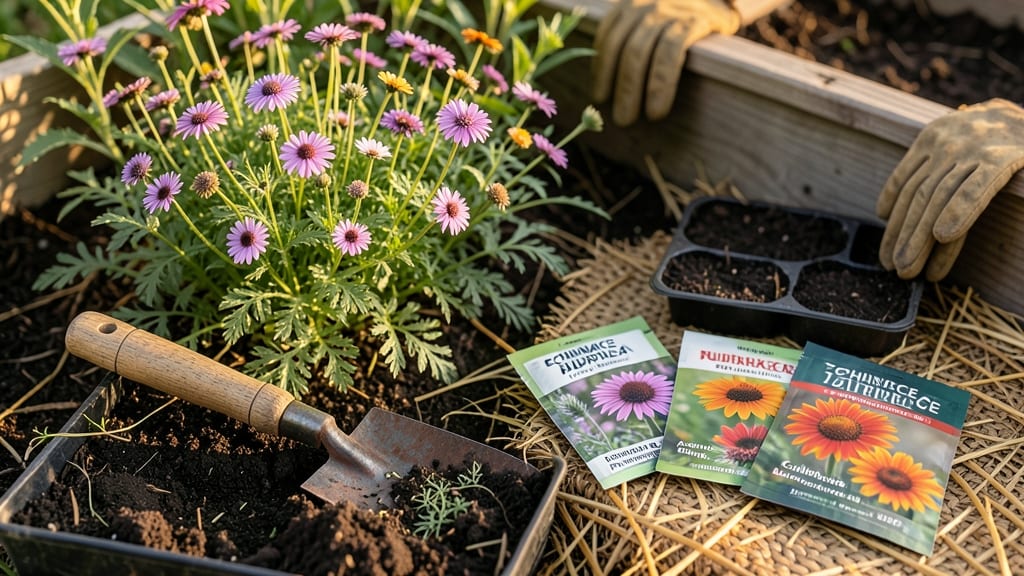
To plant wildflower seeds in Tennessee, aim for late winter to early spring or late summer to early fall when soil temperatures are ideal for germination.
Tennessee’s diverse climate—from humid Appalachian valleys to hotter southern plains—can make wildflower planting tricky. Plant at the wrong time, and your seeds may fail to germinate, while perfect timing unlocks vibrant meadows full of pollinators.
Spring planting in Tennessee’s 6a-7b zones works best after the last frost date, usually around mid-March, while fall planting in late August to September gives seeds a head start before winter. Both seasons offer unique advantages depending on your location and the types of 🌼 wildflowers you’re growing.
Below, I’ll break down the best planting windows, soil prep tips, and the top native wildflowers for Tennessee—so you can create a thriving meadow that blooms year after year.
Best planting windows for Tennessee wildflowers: spring vs fall timing explained
Tennessee’s three distinct regions—East, Middle, and West—each have unique microclimates that impact wildflower germination. While many gardeners assume spring planting is best, fall planting often yields higher success rates due to cooler soil temperatures and natural rainfall.
Let’s break down the science behind timing to help you choose the perfect window for your location and seed types.
The key to successful wildflower planting lies in soil temperature thresholds and moisture availability. Most wildflower seeds require soil temps between 50°F and 75°F for optimal germination.
In Tennessee, spring planting (March-April) works well in the West and Middle regions, while fall planting (August-September) is ideal for East Tennessee’s cooler highlands. Annuals like Black-Eyed Susan thrive in spring, while perennials such as Purple Coneflower benefit from fall’s gentler conditions.
One common myth is that spring planting delays (like waiting until May) will still work. However, summer heat can cause seeds to dry out before germinating, leading to poor establishment.
For best results, plant when soil is workable but not frozen—typically 2-4 weeks before the last frost date in your region.
Here’s how Tennessee’s regions compare for spring vs. fall planting, including seed types, soil conditions, and moisture needs to maximize your wildflower meadow’s success.
| Region | Best Planting Window | Seed Types | Soil Temp Threshold | Moisture Needs | Key Tips |
|---|---|---|---|---|---|
| East Tennessee | Fall (Aug-Sept) or Early Spring (March) | Perennials (Coneflower, Aster) | 50°F-65°F | Moderate (natural rainfall) | Avoid late fall planting; use mulch to retain moisture. |
| Middle Tennessee | Spring (March-April) or Fall (Sept) | Annuals (Coreopsis, Zinnia) | 60°F-70°F | Light (water 2x/week) | Spring planting requires consistent watering; fall seeds benefit from winter rains. |
| West Tennessee | Spring (April) or Late Fall (Oct) | Drought-tolerant (Butterfly Weed, Partridge Pea) | 65°F-75°F | Low (once established) | Spring planting needs deep watering to combat dry soils; fall seeds germinate with winter moisture. |
For annual wildflowers, which complete their life cycle in one season, spring planting (March-April) is ideal because they’ll bloom and set seed before summer heat stresses them.
Examples like Coreopsis and Zinnia thrive when sown 2-4 weeks before the last frost, giving them a 60-90 day growing season to mature.
In East Tennessee, where springs can be unpredictable, fall planting (August-September) ensures seeds germinate in cooler, wetter conditions, reducing the risk of seed desiccation from summer droughts.
Perennial wildflowers, such as Purple Coneflower and Black-Eyed Susan, benefit more from fall planting because their roots establish over winter, giving them a head start in spring. These plants prefer soil temperatures between 50°F and 65°F, which aligns perfectly with September-October in most of Tennessee. Fall-planted perennials often bloom earlier and produce larger flowers because they’ve had time to develop a strong root system.
One critical factor often overlooked is moisture consistency. Tennessee’s clay-heavy soils in the Middle and West regions can become waterlogged in spring or bone-dry in summer. To combat this, amend soil with compost before planting to improve drainage and moisture retention.
In East Tennessee’s mountainous areas, natural rainfall is usually sufficient, but mulching with straw helps retain moisture during spring droughts or fall dry spells.
If you’re planting in late spring (May-June), which many gardeners do, success depends on immediate moisture. Seeds sown after May 15 in Tennessee often struggle because soil temperatures exceed 75°F, and evaporation rates spike.
To mitigate this, water seeds daily until germination (usually 7-14 days) and use shade cloth to protect them from intense afternoon sun. However, this method is less reliable than spring or fall planting and requires extra effort.
For native wildflowers, which are adapted to Tennessee’s climate, fall planting is often the best strategy because it mimics natural wildfire and disturbance cycles that trigger germination. Many native seeds have dormancy mechanisms that require cold stratification, a process that happens naturally over winter.
By planting in September, you’re giving these seeds the ideal conditions to break dormancy and sprout in early spring, when competition from weeds is lower.
To
How to prepare Tennessee soil for wildflower seed germination by season
Tennessee’s clay-heavy soils and drought-prone areas require special prep to give wildflower seeds the best start. Whether you’re planting in spring or fall, the right soil conditions can mean the difference between sparse blooms and a lush meadow.
I’ll walk you through season-specific techniques to optimize germination, from pH adjustments to moisture retention strategies tailored to our unique climate.
Spring planting in Tennessee typically begins after the last frost date (around mid-March), while fall planting in late August to September allows seeds to establish roots before winter. Both seasons demand different soil prep approaches.
For example, spring soil may need weed suppression to outcompete early-season growth, while fall soil benefits from organic matter to retain moisture during winter rains. Let’s break down the steps for each season.
-
🌱 Spring Soil Prep (March-April)
- Test soil pH (6.0-7.0)—use lime to raise or sulfur to lower.
- Remove weeds with a hula hoe or smother with cardboard.
- Loosen top 2-3 inches of clay soil with a broadfork.
-
🌿 Fall Soil Prep (August-September)
- Add 2-3 inches of compost to improve drainage in clay.
- Use a straw mulch (1-2 inches) to retain moisture over winter.
- Avoid tilling—disturb soil minimally to preserve beneficial microbes.
-
💧 Year-Round Tips for Tennessee
- For drought-prone areas, mix in hydrated lime to improve water retention.
- Seed beds should be firm but not compacted—press lightly with a board.
- Water deeply 1-2 times weekly until seeds germinate (keep soil moist but not soggy).
One of the biggest challenges in Tennessee is dealing with clay soil, which can become waterlogged or baked hard. To break it up, I recommend amending with sand or perlite (20% of the soil volume) to improve aeration.
For example, in West Tennessee’s hotter regions, adding coarse sand helps prevent soil from forming a crust that blocks seed contact with moisture. In East Tennessee’s cooler zones, focus on organic matter like leaf mold to enhance water retention.
Weed suppression is critical in spring, as competitive grasses can choke out wildflower seedlings. I’ve had the most success using a pre-emergent herbicide like corn gluten meal (apply 20 lbs per 1,000 sq ft) or simply smothering the area with cardboard and mulch.
In fall, weeds are less aggressive, but removing them early ensures your wildflowers get the nutrients they need. For large areas, a flame weeder can be an effective tool before planting.
Moisture retention is another key factor, especially in Tennessee’s drought-prone summers. After sowing seeds, apply a thin layer of straw mulch (1/4 inch) to reduce evaporation. For clay soils, I’ve found that gypsum (10 lbs per 100 sq ft) helps break up compaction while improving water infiltration.
Always water in the early morning to minimize fungal risks and maximize absorption.
Finally, don’t forget to monitor your soil’s moisture levels closely. Wildflower seeds need consistent moisture to germinate, but once they sprout, they’re surprisingly drought-tolerant. In my Nashville garden, I’ve seen Black-Eyed Susans thrive with minimal watering after the first month.
The key is preparing the soil correctly—so whether you’re planting in spring or fall, these steps will set your wildflowers up for success.