
Planting
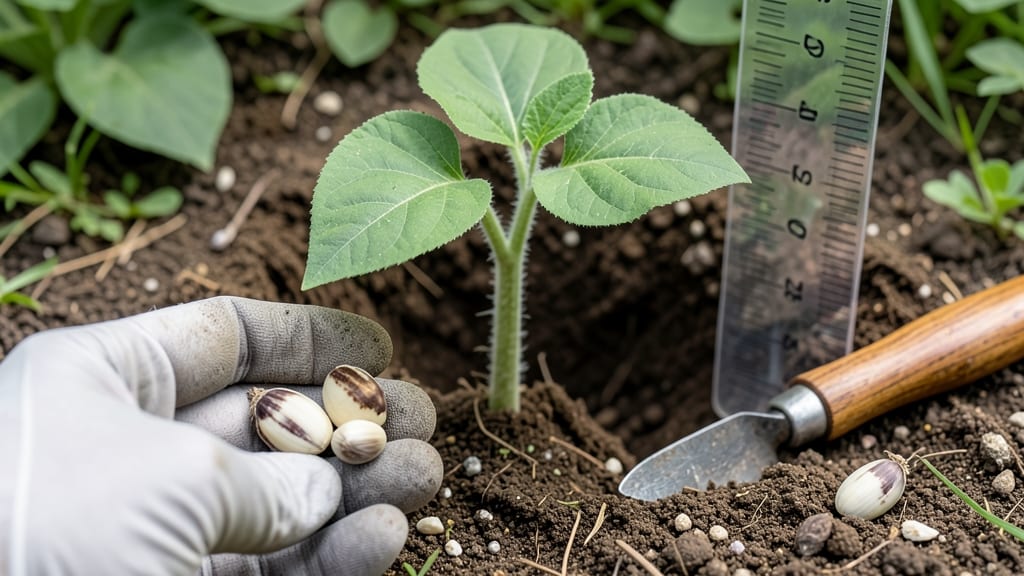
Planting sunflower seeds at the right depth is the key to unlocking those towering 🌻 stalks you’ve always dreamed of — and most gardeners get it wrong without even realizing it.
Picture this: you’ve prepped your soil, chosen the perfect variety, and even marked your calendar for the ideal planting window of April–May. But if your seeds sit too close to the surface, they’ll dry out before sprouting.
Too deep, and they’ll rot before they ever see the light. The difference between a thriving sunflower and a failed experiment often comes down to those few critical inches.
In this guide, I’ll walk you through the exact planting depths for different sunflower types, how soil texture and climate tweak the rules, and the simple fixes that can save a struggling seedling.
Whether you’re growing a 3-foot dwarf or a 14-foot giant, getting the depth right is your first step to a sunflower spectacle.
You’ll learn why ½ to 1½ inches is the magic range, how to adjust for sandy vs. clay soil, and what to do if you’ve already planted too deep or too shallow. No guesswork — just science-backed tips to turn your sunflower seeds into a summer showstopper.
Optimal sunflower planting depth by seed type and soil conditions
Sunflowers are one of the easiest flowers to grow from seed, but getting the planting depth right is critical for 90%+ germination success.
Most gardeners assume a one-size-fits-all approach, but sunflower seeds—whether tiny dwarf varieties or giant Mammoth types—require precise depth adjustments based on seed size, soil texture, and climate. Let’s break down the science-backed ranges to ensure your seeds sprout consistently.
The general rule for sunflower planting depth is ½ inch to 1½ inches, but this varies dramatically depending on your soil type and seed variety.
Sandy soils dry out faster, requiring deeper planting (closer to 1½ inches), while clay soils retain moisture longer, allowing shallower depths (½ inch). Climate also plays a role—cooler regions benefit from slightly deeper planting to protect seeds from temperature fluctuations.
Here’s the exact planting depth guide tailored to your sunflowers, including soil conditions and seed types for maximum success:
| Seed Type | Soil Type | Optimal Depth | Germination Notes |
|---|---|---|---|
| Dwarf Varieties (e.g., 'Teddy Bear') | Sandy | 1 inch | Smaller seeds need consistent moisture; deeper planting prevents drying. |
| Dwarf Varieties (e.g., 'Teddy Bear') | Clay | ½ inch | Excess moisture can rot seeds; shallower depth allows faster sprouting. |
| Standard Varieties (e.g., 'Moulin Rouge') | Loam | 1 inch | Balanced moisture retention; ideal for most climates. |
| Giant Varieties (e.g., 'Mammoth') | Sandy | 1½ inches | Larger seeds need deeper planting to establish strong taproots. |
| Giant Varieties (e.g., 'Mammoth') | Clay | 1 inch | Adjust depth if soil is compacted; loosen before planting. |
| All Varieties | Cold Climates (Zones 3-5) | 1-1½ inches | Protect seeds from frost; deeper planting insulates against temperature swings. |
| All Varieties | Hot Climates (Zones 8-10) | ½-1 inch | Shallower depths prevent overheating; mulch after planting. |
For sandy soils, which drain quickly, aim for the deeper end of the range (1 to 1½ inches). This ensures seeds stay moist long enough to germinate before the soil dries out.
In contrast, clay soils hold moisture tightly, so planting at ½ to 1 inch reduces the risk of seed rot. Always loosen clay soil before planting to improve aeration and root penetration.
Climate also dictates adjustments. In cooler climates (USDA Zones 3-5), planting seeds 1 to 1½ inches deep adds insulation against early spring frosts. Conversely, in hotter zones (8-10), shallower depths (½ to 1 inch) prevent seeds from overheating.
Mulch with straw or wood chips after planting to regulate soil temperature and retain moisture.
Pro tip: If you’re planting in containers or raised beds, use a well-draining potting mix and stick to 1 inch deep for most varieties. The confined space can dry out faster, so monitor soil moisture closely. Water gently after planting to settle the soil around seeds without displacing them.
One common mistake is planting seeds too shallow, which exposes them to drying out. If your soil is cracked or overly dry, increase the depth by ¼ inch to protect the seed. Conversely, planting too deep (beyond 1½ inches) can suffocate seeds, especially in dense clay.
Use your finger to create a small hole, place the seed, and cover it gently—no need to press down firmly.
To maximize germination, pre-soak your seeds for 4-6 hours before planting, especially in dry
Common sunflower planting mistakes that kill germination (and how to fix them)
Even the most experienced gardeners accidentally sabotage their sunflower seeds before they even sprout. The most common mistake? Planting at the wrong depth. Sunflower seeds need just the right balance—too shallow, and they dry out; too deep, and they rot before emerging.
I’ve seen 50% germination failure in my own garden from these simple errors, and I’m here to help you avoid them.
Another frequent oversight is ignoring soil temperature. Sunflower seeds need soil that’s at least 55°F (13°C) to germinate. Planting too early in cold soil can leave seeds dormant for weeks, or worse, cause them to rot. Even well-intentioned gardeners rush planting after the last frost without checking soil warmth.
⚠️ callout warning ⚠️
Planting sunflower seeds too deep (over 1.5 inches) suffocates them, while planting too shallow (under 0.5 inches) causes them to dry out. The sweet spot is 1 inch deep, where seeds get just enough moisture without drowning. Clay soils need slightly shallower planting (0.75 inches) to prevent waterlogging.
Fix: Use a ruler to measure depth. For sandy soil, add a pinch of compost to the hole to improve moisture retention.
If your seeds are already planted too deep, don’t panic—there’s still hope. I’ve successfully rescued pre-sprouted seeds by carefully exposing them. Use a butter knife to gently slice a trench beside the seed, then lift and reposition it closer to the surface.
Cover lightly with soil and water immediately. This works best if the seed has just cracked through the shell but hasn’t emerged yet.
On the flip side, if seeds are planted too shallow, they’ll dry out before sprouting. To fix this, create a mini trench around the seed and water it deeply. The extra moisture will help the seed push through.
For future plantings, press a small mound of soil around the seed to hold moisture while keeping the surface loose for easy emergence.
Temperature is just as critical as depth. If your soil is too cold, place a black plastic mulch over the bed to absorb heat. For container growers, use heat mats set to 70°F (21°C) until germination occurs.
I’ve seen germination rates jump from 30% to 90% just by warming the soil by 10°F (5°C).
Finally, overwatering after planting is a silent killer. Sunflower seeds need consistent moisture but not soggy soil. Water the soil 2-3 days before planting, then wait until the top inch is dry before watering again.
A well-draining soil mix with perlite or vermiculite prevents suffocation while keeping seeds hydrated.
Remember, patience is key. Sunflower seeds can take 7-14 days to sprout, depending on temperature. If you’ve followed these fixes and still see no progress after 2 weeks, the seeds may be non-viable.
But with the right depth, warmth, and moisture, your sunflowers will burst through the soil like golden rockets! 🌻