
Plants
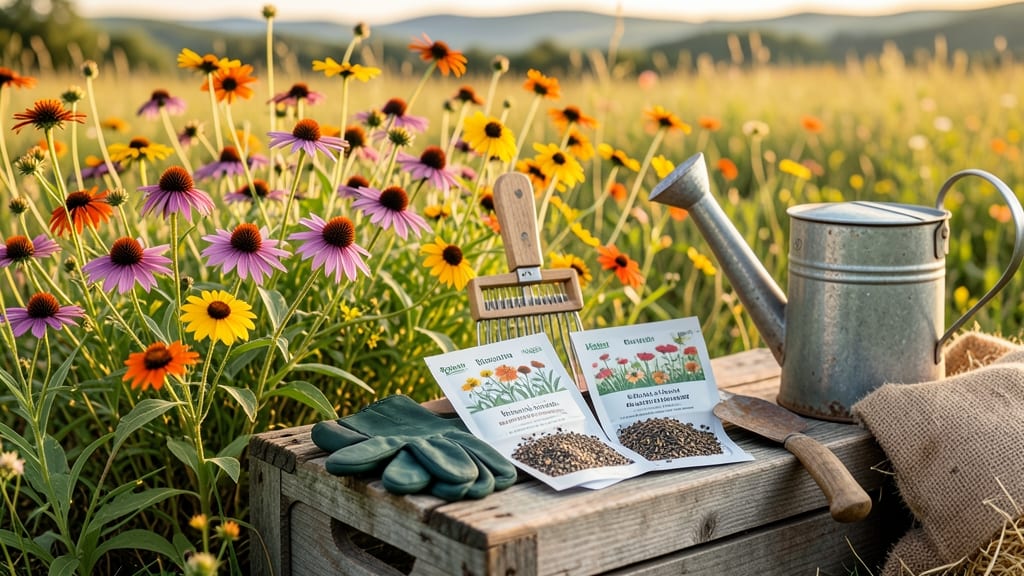
To plant wildflower seeds in Kentucky, aim for early spring—March to April—or late summer through early fall, when temperatures are mild and frost isn’t a threat.
Kentucky’s diverse climate—from humid Appalachian valleys to the Bluegrass Region’s rolling hills—creates the perfect conditions for wildflower meadows, but timing your planting is everything. Plant too early, and frost will wipe out tender seedlings; too late, and summer heat may stunt growth.
Native species like purple coneflower and black-eyed Susans thrive when seeded after the last frost (mid-March), while late-summer plantings in August or September give roots time to establish before winter. The key is matching your zone (6a-7a) with the right window.
Here’s how to prep your soil, choose the best species for your microclimate, and lock in blooms from spring to fall—without the guesswork.
Best planting months in Kentucky by hardiness Zone (7a-7b)
Kentucky’s USDA Hardiness Zones 7a and 7b offer two distinct windows for planting wildflower seeds—early spring and late summer/fall. Each zone has unique frost patterns and microclimates that affect timing.
For example, Louisville (Zone 7a) typically sees its last frost around March 15, while Eastern Kentucky (Zone 7b) may experience frost until April 1 due to higher elevations.
In Zone 7a, the safest planting periods are March 15–April 15 (spring) and August 15–September 15 (fall). Zone 7b gardeners should wait until April 1–May 1 for spring and September 1–October 1 for fall to avoid late frosts.
These windows ensure seeds germinate in warm soil while avoiding extreme summer heat or winter dormancy.
| Zone & Region | Ideal Planting Window | Key Considerations |
|---|---|---|
| Zone 7a (Louisville, Bowling Green) | March 15–April 15 (Spring) or August 15–September 15 (Fall) | Last frost: March 15. Avoid planting before soil reaches 50°F. |
| Zone 7b (Eastern KY, Appalachian foothills) | April 1–May 1 (Spring) or September 1–October 1 (Fall) | Last frost: April 1. Higher elevations may delay planting by 2–3 weeks. |
| Both Zones | Avoid June–July (peak heat) | Seeds need consistent moisture to germinate; drought stress kills seedlings. |
Spring planting in Kentucky leverages cool soil temperatures and steady rainfall to kickstart growth. For Zone 7a, focus on mid-March to mid-April when soil temperatures stabilize above 50°F.
In Zone 7b, wait until April 1 to align with later frost dates in mountainous areas like Letcher County.
Fall planting, however, offers a second chance for wildflowers to establish roots before winter. In Zone 7a, aim for mid-August to mid-September to allow seeds to germinate in warm soil while avoiding early November frosts.
Zone 7b gardeners should shift to September 1–October 1 to account for cooler highland climates.
Microclimates play a critical role in Kentucky’s planting success. For instance, Louisville’s urban heat islands may allow earlier spring planting by 1–2 weeks compared to rural areas. Meanwhile, Eastern Kentucky’s Appalachian valleys experience cooler nights, delaying spring planting by up to 3 weeks.
Always monitor local frost forecasts and adjust your timeline accordingly.
One common mistake is planting wildflower seeds too deeply. Most species require light burial—no more than 1/4 inch—to germinate. Use a seed spreader or gently press seeds into prepared soil. In Kentucky’s clay-heavy soils, mix in compost or sand to improve drainage and prevent seed rot.
For native wildflowers like purple coneflower or black-eyed Susan, timing matters even more. These species thrive when planted in late summer (August–September), as cooler fall temperatures reduce pest pressure and disease risk.
If you’re sowing annual wildflowers (e.g., cosmos or zinnias), spring planting is ideal for immediate summer blooms.
Pro tip: Stratify seeds for 2–4 weeks in a damp paper towel in the fridge if planting in late fall. This mimics natural winter conditions and breaks seed dormancy, ensuring better germination in Zone 7b’s colder microclimates.
Always label your planting dates to track which species thrive in your specific Kentucky zone.
Remember, Kentucky’s 165 frost-free days create a 6-month growing window for wildflowers. By aligning your planting with local frost data and soil conditions, you’ll maximize blooms from spring to fall. Start with small test plots to refine your timing before committing to large meadows.
Soil preparation secrets for Kentucky wildflower success
Kentucky’s clay-heavy soils and loamy textures can feel like a gardener’s challenge, but native wildflowers like black-eyed Susans and purple coneflowers thrive here with the right prep. The key?
Mimicking natural prairie conditions by balancing organic matter, adjusting pH levels, and improving drainage. Let’s break down the science-backed steps to create the perfect wildflower foundation.
Start by testing your soil pH—the ideal range for Kentucky wildflowers is 6.0 to 7.5. Most Kentucky soils lean acidic or neutral, but native species like butterfly weed and goldenrod prefer slightly alkaline conditions.
Grab a pH testing kit from your local garden center and adjust with lime (to raise pH) or sulfur (to lower it) if needed.
⚠️ WARNING: Avoid Over-Tilling!
Kentucky’s clay soils are prone to compaction, and over-tilling can destroy soil structure. Instead, use a broadfork to loosen the top 6-8 inches without flipping the soil. Wildflowers thrive in undisturbed soil, so focus on breaking up hardpan and mixing in organic amendments like compost or leaf mold. This mimics the natural prairie ecosystem where wildflowers evolved.
For organic matter, choose between compost (for quick nutrient boost) or leaf mold (for long-term soil structure). Spread a 2-3 inch layer over your prepared area and lightly rake it in.
If your soil is particularly dense, consider adding sand or perlite to improve drainage—wildflowers hate soggy roots! Aim for a 30% organic matter mix to create the perfect seedbed.
Next, create a micro-meadow by raking the soil into shallow furrows (about 1/4 inch deep). This helps with seed-to-soil contact without burying them too deeply. Native wildflower seeds need light to germinate, so avoid covering them with more than 1/8 inch of soil.
For larger seeds like coreopsis, press them gently into the soil, while tiny seeds like phlox can be scattered and lightly patted down.
Finally, consider mulching lightly with straw or pine needles to retain moisture and suppress weeds. Avoid heavy mulch, as it can smother emerging seedlings. Water gently but thoroughly after planting to settle the soil and encourage seed contact.
Kentucky’s humid climate means you won’t need to water often once established, but keep the soil moist (not soggy) for the first 4-6 weeks.
With these steps, your Kentucky wildflower meadow will have the ideal growing conditions to flourish year after year. Remember, patience is key—some native species may take 2-3 years to reach their full bloom potential, but the wait is worth it for the pollinator paradise you’ll create! 🌻